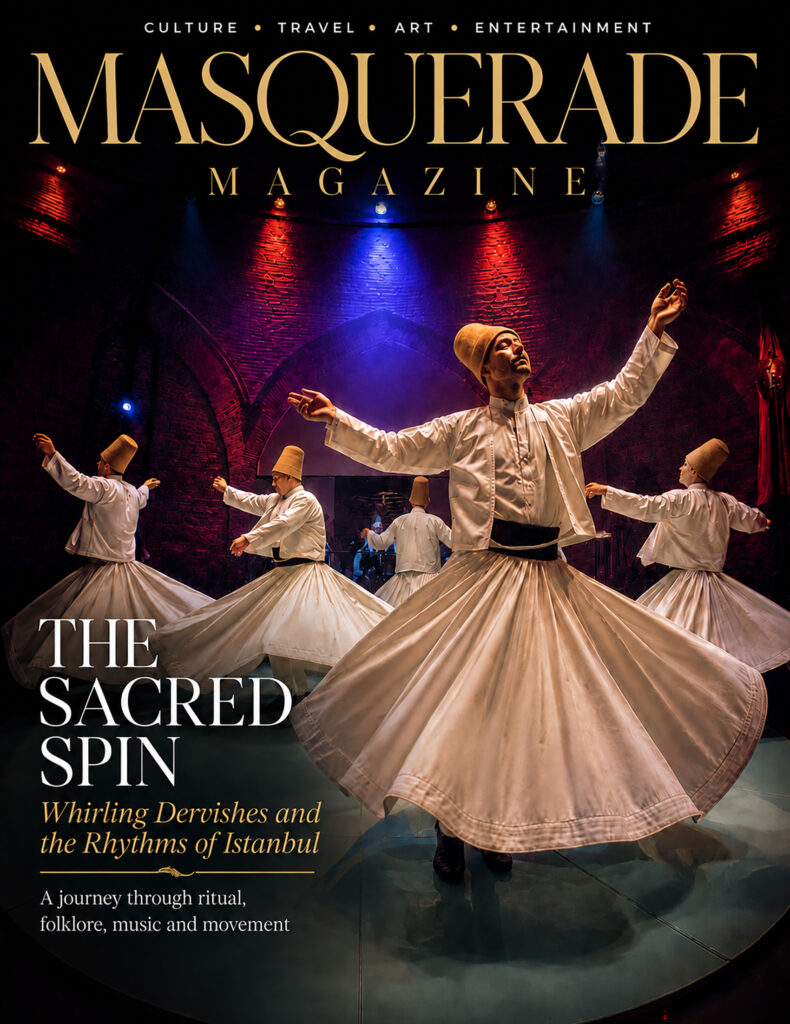
Whirling Dervishes and the Rhythms of Istanbul
Story and Photography by Terry Check
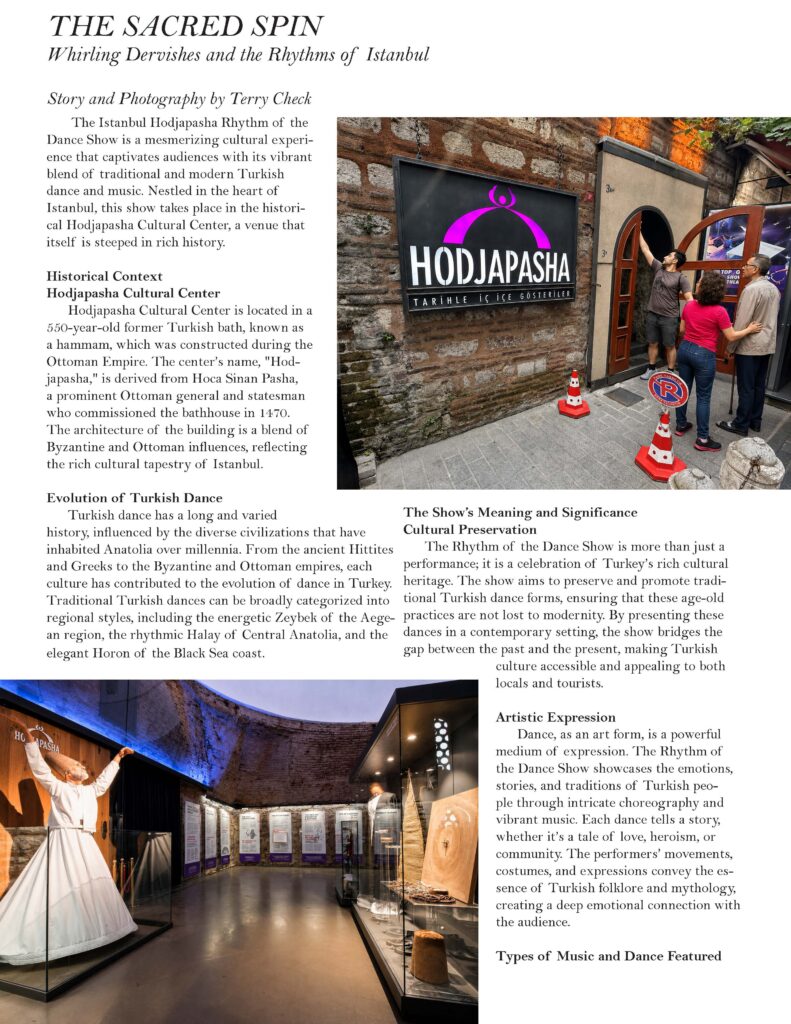
The Istanbul Hodjapasha Rhythm of the Dance and Hodjapasha Rhythm of the Dance Shows are a mesmerizing cultural experience that captivates audiences with its vibrant blend of traditional and modern Turkish dance and music. Nestled in the heart of Istanbul, this show takes place in the historical Hodjapasha Cultural Center, a venue that itself is steeped in rich history.
Historical Context
Hodjapasha Cultural Center
Hodjapasha Cultural Center is located in a 550-year-old former Turkish bath, known as a hammam, which was constructed during the Ottoman Empire. The center’s name, “Hodjapasha,” is derived from Hoca Sinan Pasha, a prominent Ottoman general and statesman who commissioned the bathhouse in 1470. The architecture of the building is a blend of Byzantine and Ottoman influences, reflecting the rich cultural tapestry of Istanbul.
Evolution of Turkish Dance
Turkish dance has a long and varied history, influenced by the diverse civilizations that have inhabited Anatolia over millennia. From the ancient Hittites and Greeks to the Byzantine and Ottoman empires, each culture has contributed to the evolution of dance in Turkey. Traditional Turkish dances can be broadly categorized into regional styles, including the energetic Zeybek of the Aegean region, the rhythmic Halay of Central Anatolia, and the elegant Horon of the Black coast.
The Show’s Meaning and Significance
Cultural Preservation
The Rhythm of the Dance Show is more than just a performance; it is a celebration of Turkey’s rich cultural heritage. The show aims to preserve and promote traditional Turkish dance forms, ensuring that these age-old practices are not lost to modernity. By presenting these dances in a contemporary setting, the show bridges the gap between the past and the present, making Turkish culture accessible and appealing to both locals and tourists.
Artistic Expression
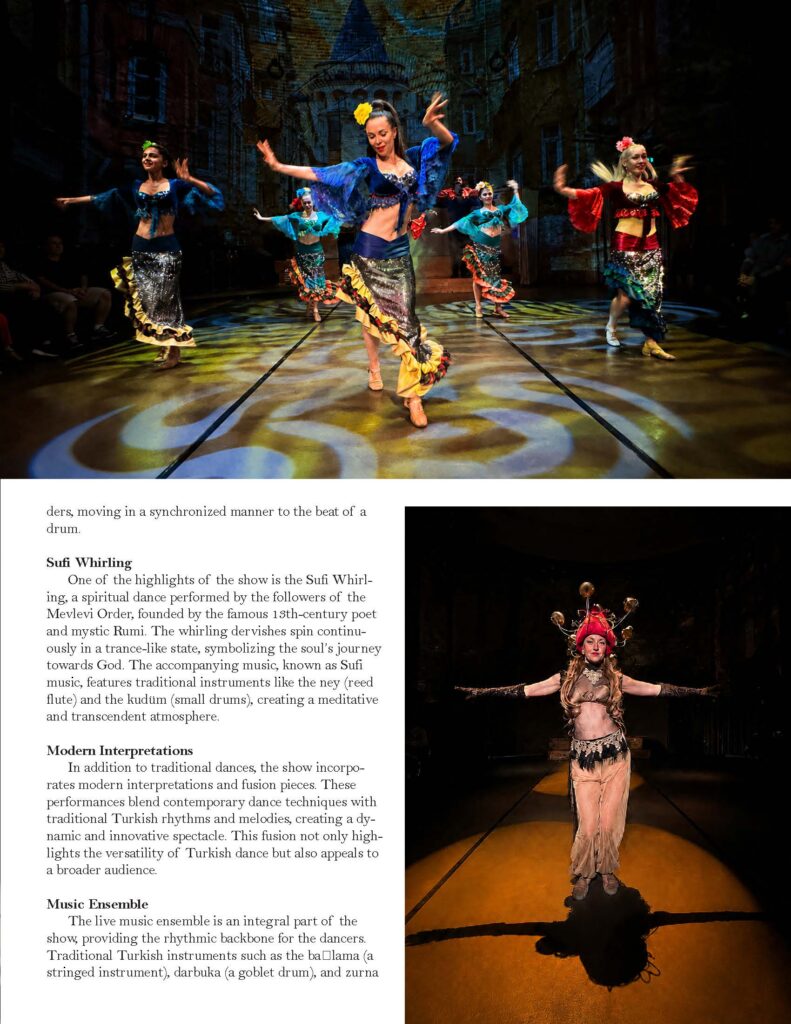
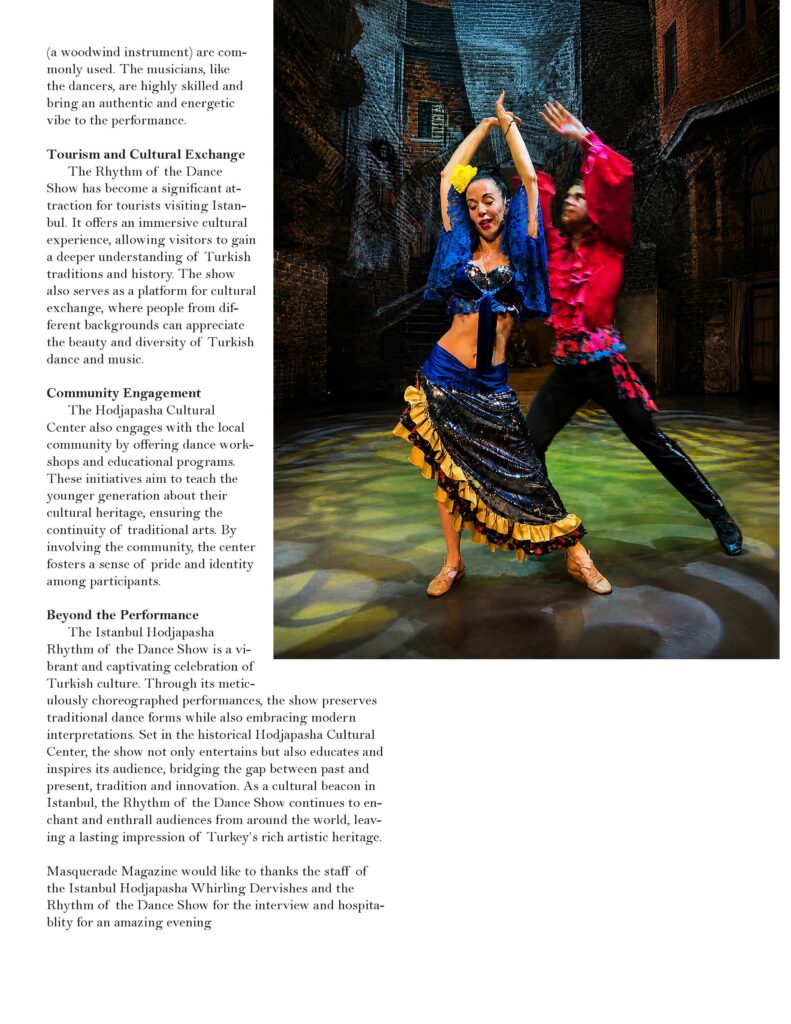
Dance, as an art form, is a powerful medium of expression. The Rhythm of the Dance Show showcases the emotions, stories, and traditions of Turkish people through intricate choreography and vibrant music. Each dance tells a story, whether it’s a tale of love, heroism, or community. The performers’ movements, costumes, and expressions convey the essence of Turkish folklore and mythology, creating a deep emotional connection with the audience.
Types of Music and Dance Featured
Folk Dances
The show features a variety of Turkish folk dances, each with its own unique rhythm, steps, and cultural significance. Some of the prominent folk dances showcased include:
Sufi Whirling
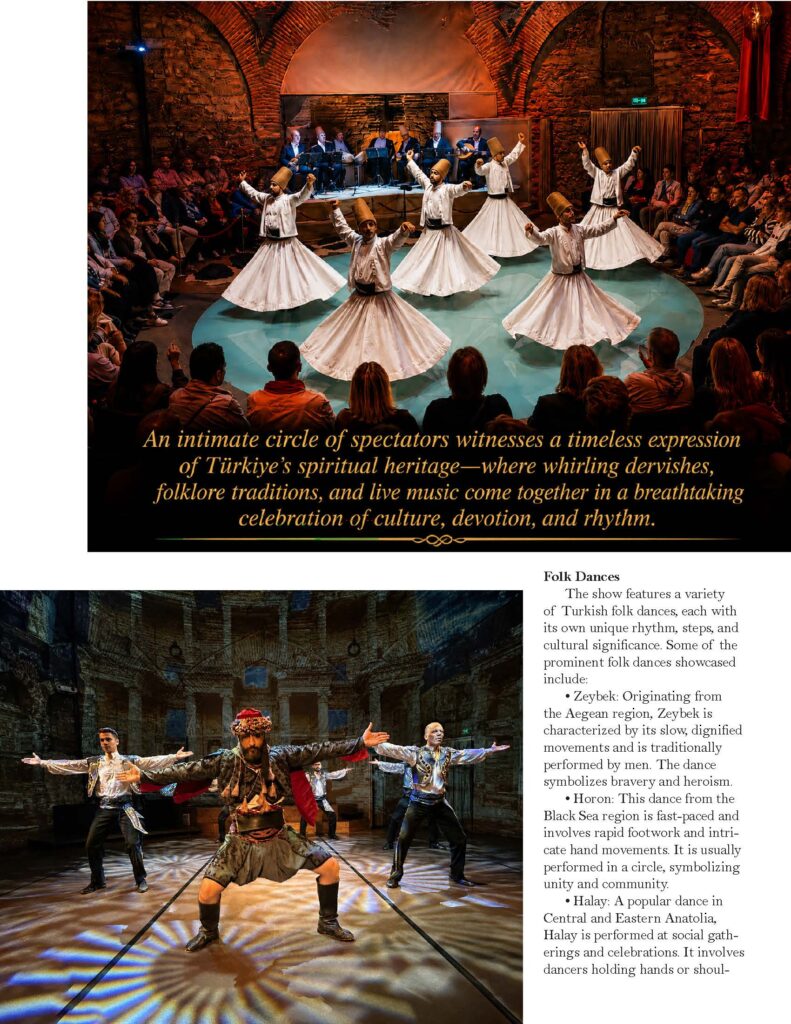
One of the highlights of the show is the Sufi Whirling, a spiritual dance performed by the followers of the Mevlevi Order, founded by the famous 13th-century poet and mystic Rumi. The whirling dervishes spin continuously in a trance-like state, symbolizing the soul’s journey towards God. The accompanying music, known as Sufi music, features traditional instruments like the ney (reed flute) and the kudüm (small drums), creating a meditative and transcendent atmosphere.
Modern Interpretations
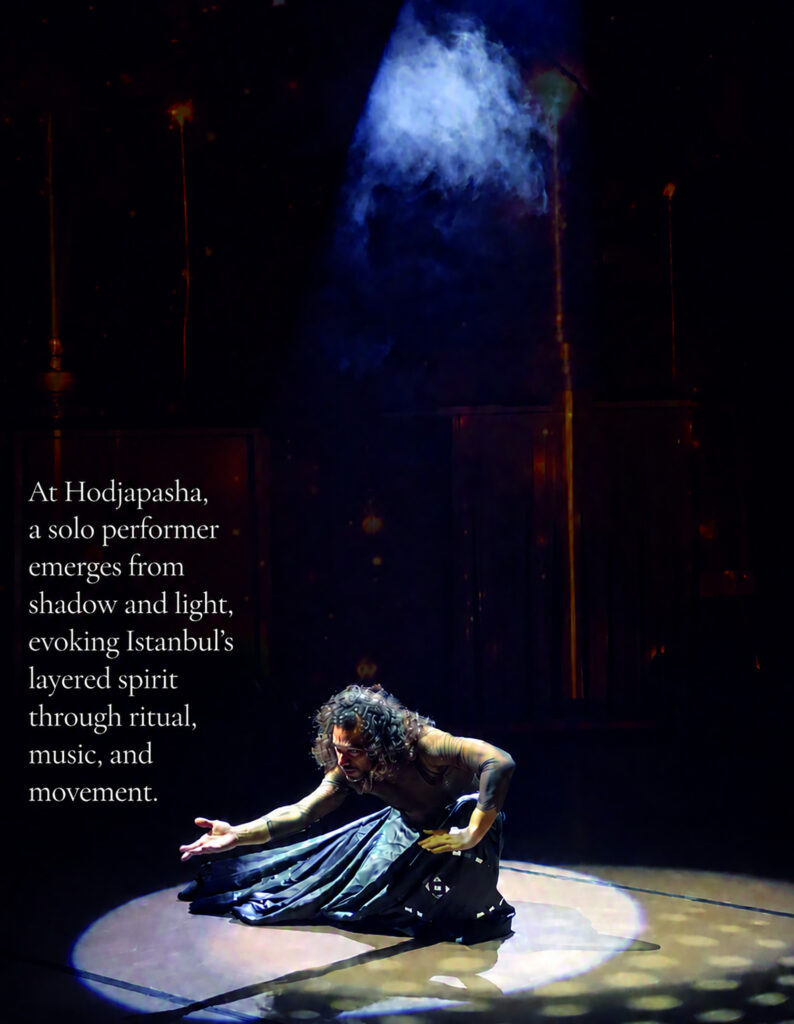
In addition to traditional dances, the show incorporates modern interpretations and fusion pieces. These performances blend contemporary dance techniques with traditional Turkish rhythms and melodies, creating a dynamic and innovative spectacle. This fusion not only highlights the versatility of Turkish dance but also appeals to a broader audience.
Music Ensemble
The live music ensemble is an integral part of the show, providing the rhythmic backbone for the dancers. Traditional Turkish instruments such as the bağlama (a stringed instrument), darbuka (a goblet drum), and zurna (a woodwind instrument) are commonly used. The musicians, like the dancers, are highly skilled and bring an authentic and energetic vibe to the performance.
Tourism and Cultural Exchange
The Rhythm of the Dance Show has become a significant attraction for tourists visiting Istanbul. It offers an immersive cultural experience, allowing visitors to gain a deeper understanding of Turkish traditions and history. The show also serves as a platform for cultural exchange, where people from different backgrounds can appreciate the beauty and diversity of Turkish dance and music.
Community Engagement
The Hodjapasha Cultural Center also engages with the local community by offering dance workshops and educational programs. These initiatives aim to teach the younger generation about their cultural heritage, ensuring the continuity of traditional arts. By involving the community, the center fosters a sense of pride and identity among participants.
Beyond the Performance
The Istanbul Hodjapasha Rhythm of the Dance Show is a vibrant and captivating celebration of Turkish culture. Through its meticulously choreographed performances, the show preserves traditional dance forms while also embracing modern interpretations. Set in the historical Hodjapasha Cultural Center, the show not only entertains but also educates and inspires its audience, bridging the gap between past and present, tradition and innovation. As a cultural beacon in Istanbul, the Rhythm of the Dance Show continues to enchant and enthrall audiences from around the world, leaving a lasting impression of Turkey’s rich artistic heritage.
Masquerade Magazine would like to thanks the staff of the Istanbul Hodjapasha Whirling Dervishes and the Rhythm of the Dance Show for the interview and hospitablity for an amazing evening
