Story and Photography by Terry Check
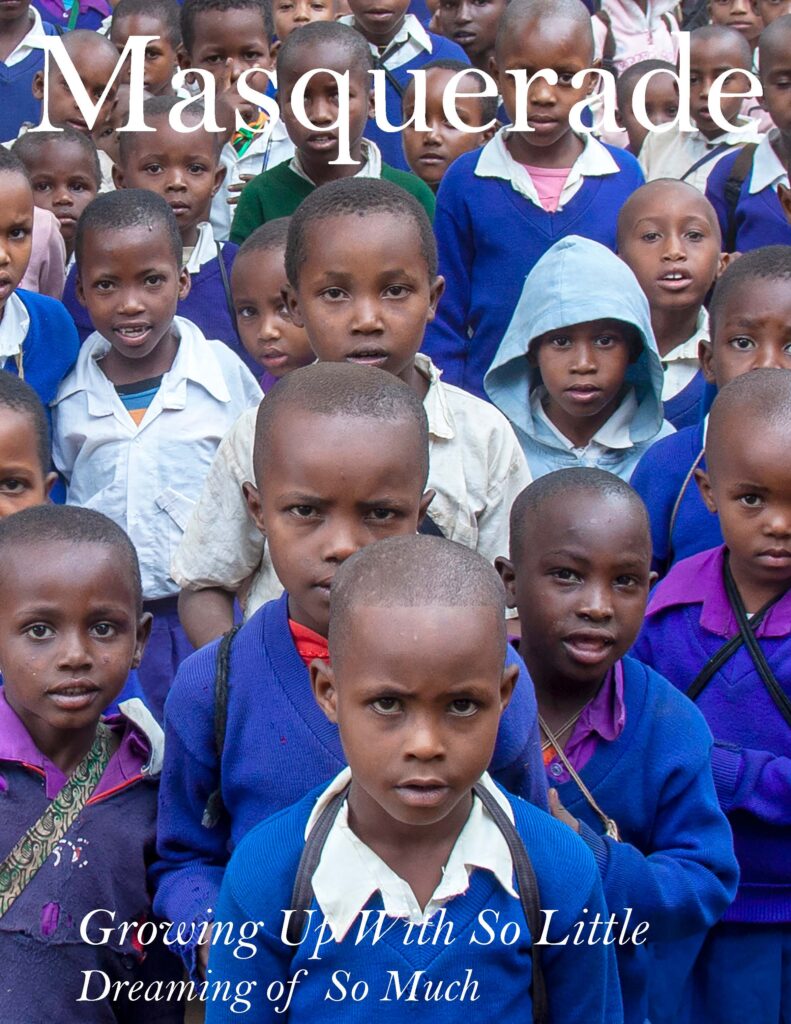
Morning in the village of Mamire
The morning sun rises over the rolling hills of Mamire, a small agricultural village located near Kitbong Hill in Tanzania. The air is cool, laced with the scent of earth freshly turned from farmwork. Families here live in wooden shacks of tree branches topped with thatched roofs, their walls held together by determination as much as timber. There is no electricity to flip on, no running water in the homes. Water must be carried from the nearby spring or stream that winds its way toward the village.
Mamire lies not far from the Tarangire National Park, one of Africa’s greatest natural wonders. Tourists come from across the globe to witness its sweeping savannahs and roaming wildlife. But the children of Mamire have never seen the park. Entrance fees are impossibly high for local villagers. Instead, their experience of the wild comes in more dangerous, immediate ways: elephants raiding their farms, trampling maize fields, and tearing through family gardens in search of food.
In this village, life is a balance between cultivating the land and defending it. And at the center of it all stand the children, whose education unfolds against both hardship and resilience.
Elephants in the Fields
After school, many children return home to help their families in the fields. Farming is the lifeblood of Mamire. Maize, beans, coffee, and vegetables provide food and income. Yet farming here comes with danger: elephants.
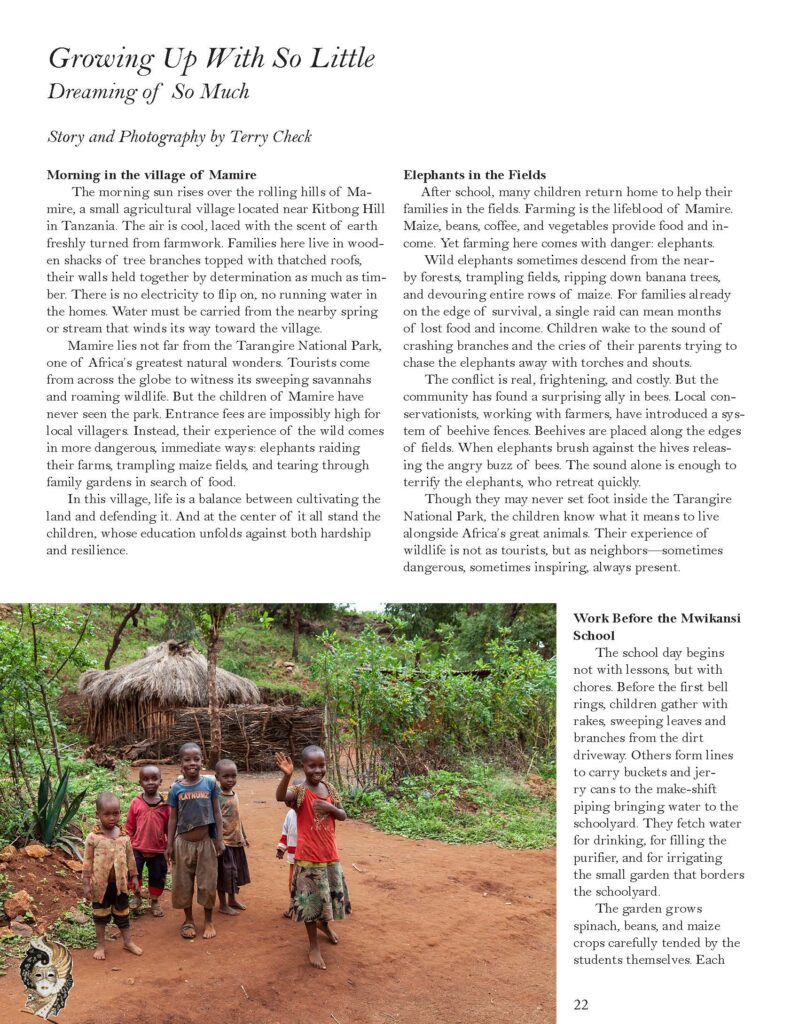
Wild elephants sometimes descend from the nearby forests, trampling fields, ripping down banana trees, and devouring entire rows of maize. For families already on the edge of survival, a single raid can mean months of lost food and income. Children wake to the sound of crashing branches and the cries of their parents trying to chase the elephants away with torches and shouts.
The conflict is real, frightening, and costly. But the community has found a surprising ally in bees. Local conservationists, working with farmers, have introduced a system of beehive fences. Beehives are placed along the edges of fields. When elephants brush against the hives releasing the angry buzz of bees. The sound alone is enough to terrify the elephants, who retreat quickly.
Though they may never set foot inside the Tarangire National Park, the children know what it means to live alongside Africa’s great animals. Their experience of wildlife is not as tourists, but as neighbors—sometimes dangerous, sometimes inspiring, always present.
Work Before the Mwikansi School
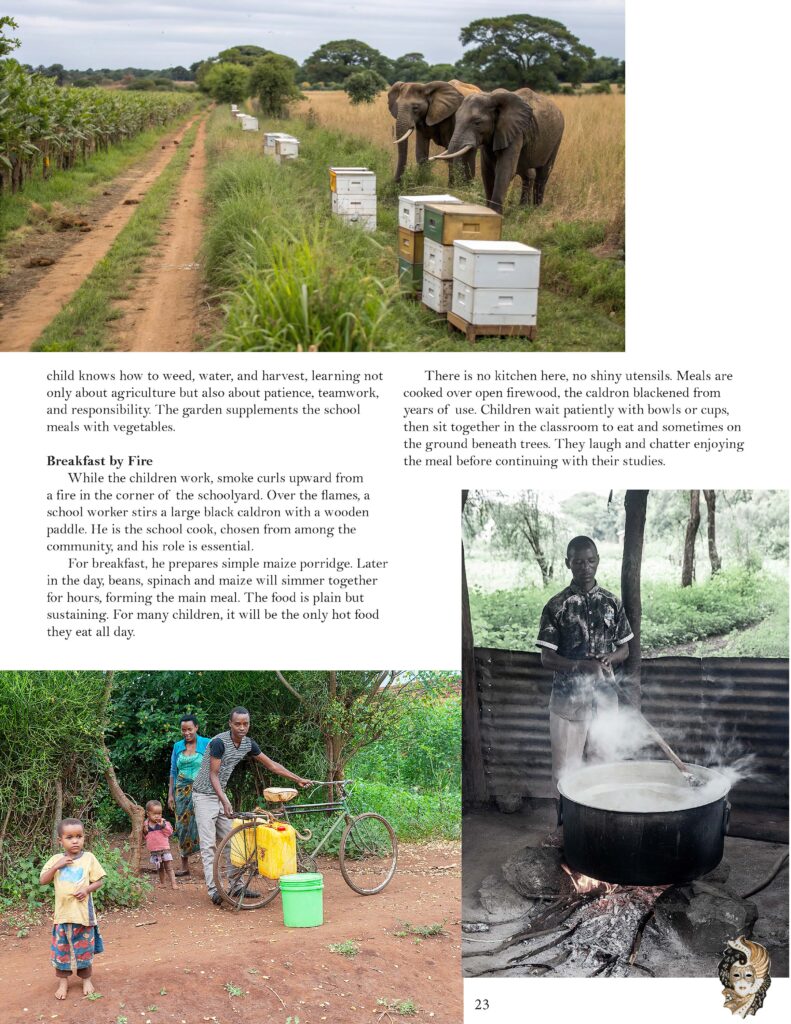
The school day begins not with lessons, but with chores. Before the first bell rings, children gather with rakes, sweeping leaves and branches from the dirt driveway. Others form lines to carry buckets and jerry cans to the make-shift piping bringing water to the schoolyard. They fetch water for drinking, for filling the purifier, and for irrigating the small garden that borders the schoolyard.
The garden grows spinach, beans, and maize crops carefully tended by the students themselves. Each child knows how to weed, water, and harvest, learning not only about agriculture but also about patience, teamwork, and responsibility. The garden supplements the school meals with vegetables.
Breakfast by Fire
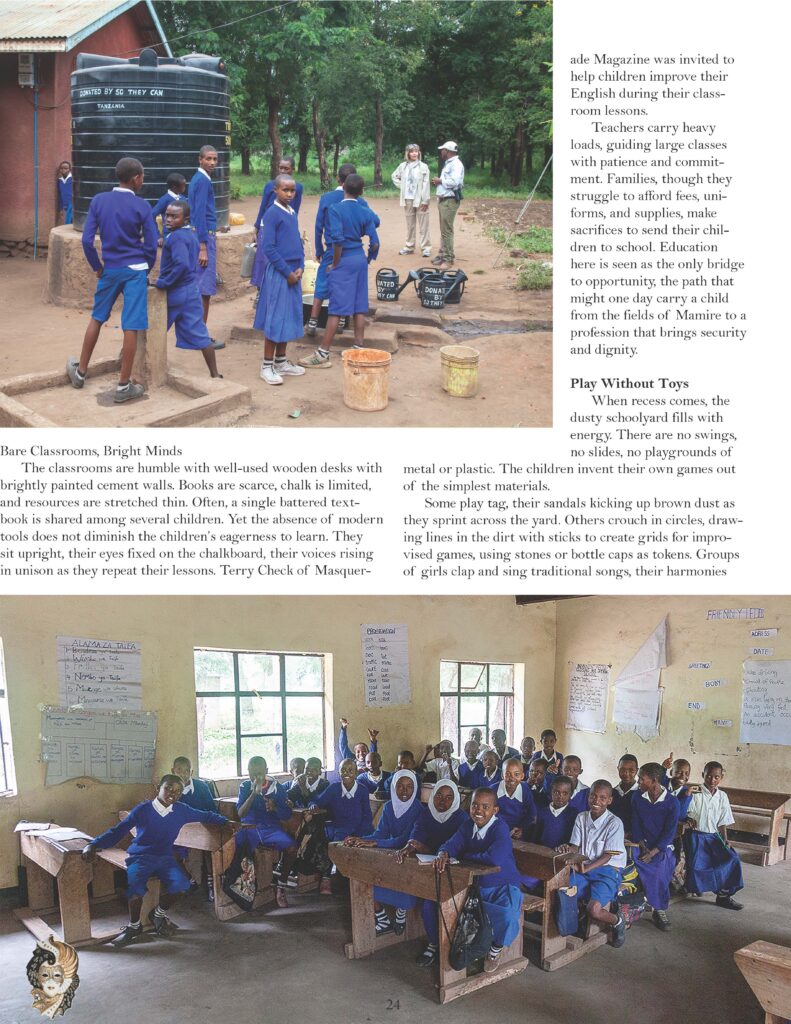
While the children work, smoke curls upward from a fire in the corner of the schoolyard. Over the flames, a school worker stirs a large black caldron with a wooden paddle. He is the school cook, chosen from among the community, and his role is essential.
For breakfast, he prepares simple maize porridge. Later in the day, beans, spinach and maize will simmer together for hours, forming the main meal. The food is plain but sustaining. For many children, it will be the only hot food they eat all day.
There is no kitchen here, no shiny utensils. Meals are cooked over open firewood, the caldron blackened from years of use. Children wait patiently with bowls or cups, then sit together in the classroom to eat and sometimes on the ground beneath trees. They laugh and chatter enjoying the meal before continuing with their studies.
Bare Classrooms, Bright Minds
The classrooms are humble with well-used wooden desks with brightly painted cement walls. Books are scarce, chalk is limited, and resources are stretched thin. Often, a single battered textbook is shared among several children. Yet the absence of modern tools does not diminish the children’s eagerness to learn. They sit upright, their eyes fixed on the chalkboard, their voices rising in unison as they repeat their lessons. Terry Check of Masquerade Magazine was invited to help children improve their English during their classroom lessons.
Teachers carry heavy loads, guiding large classes with patience and commitment. Families, though they struggle to afford fees, uniforms, and supplies, make sacrifices to send their children to school. Education here is seen as the only bridge to opportunity, the path that might one day carry a child from the fields of Mamire to a profession that brings security and dignity.
Play Without Toys
When recess comes, the dusty schoolyard fills with energy. There are no swings, no slides, no playgrounds of metal or plastic. The children invent their own games out of the simplest materials.
Some play tag, their shoes kicking up brown dust as they sprint across the yard. Others crouch in circles, drawing lines in the dirt with sticks to create grids for improvised games, using stones or bottle caps as tokens. Groups of girls clap and sing traditional songs, their harmonies rising above the hum of insects in the grass.
What they lack in toys, they make up for with imagination. In their laughter and invention lies proof that joy does not depend on material things.
The Harsh Reality of Sanitation
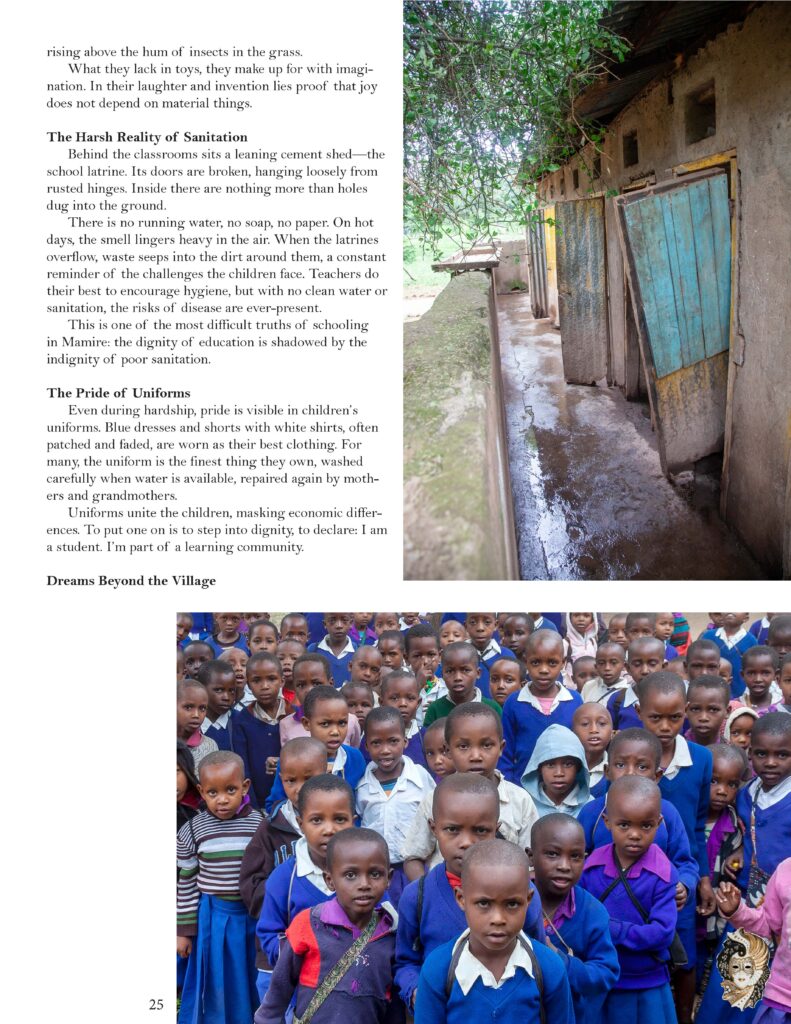
Behind the classrooms sits a leaning cement shed—the school latrine. Its doors are broken, hanging loosely from rusted hinges. Inside there are nothing more than holes dug into the ground.
There is no running water, no soap, no paper. On hot days, the smell lingers heavy in the air. When the latrines overflow, waste seeps into the dirt around them, a constant reminder of the challenges the children face. Teachers do their best to encourage hygiene, but with no clean water or sanitation, the risks of disease are ever-present.
This is one of the most difficult truths of schooling in Mamire: the dignity of education is shadowed by the indignity of poor sanitation.
The Pride of Uniforms
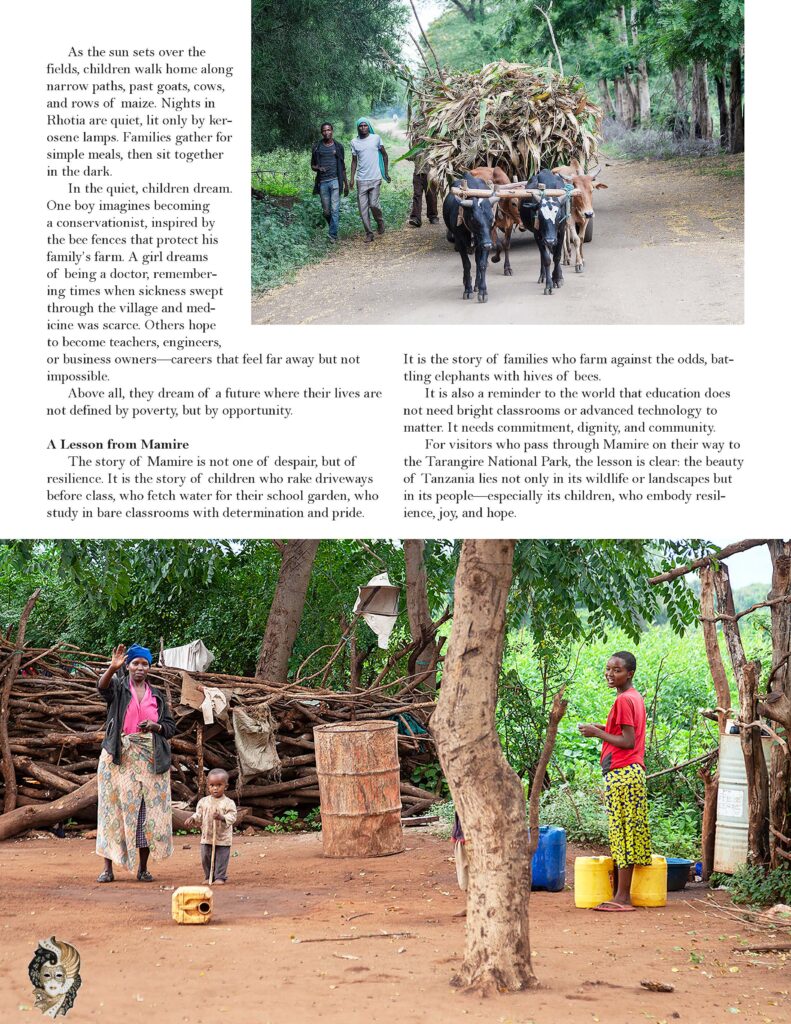
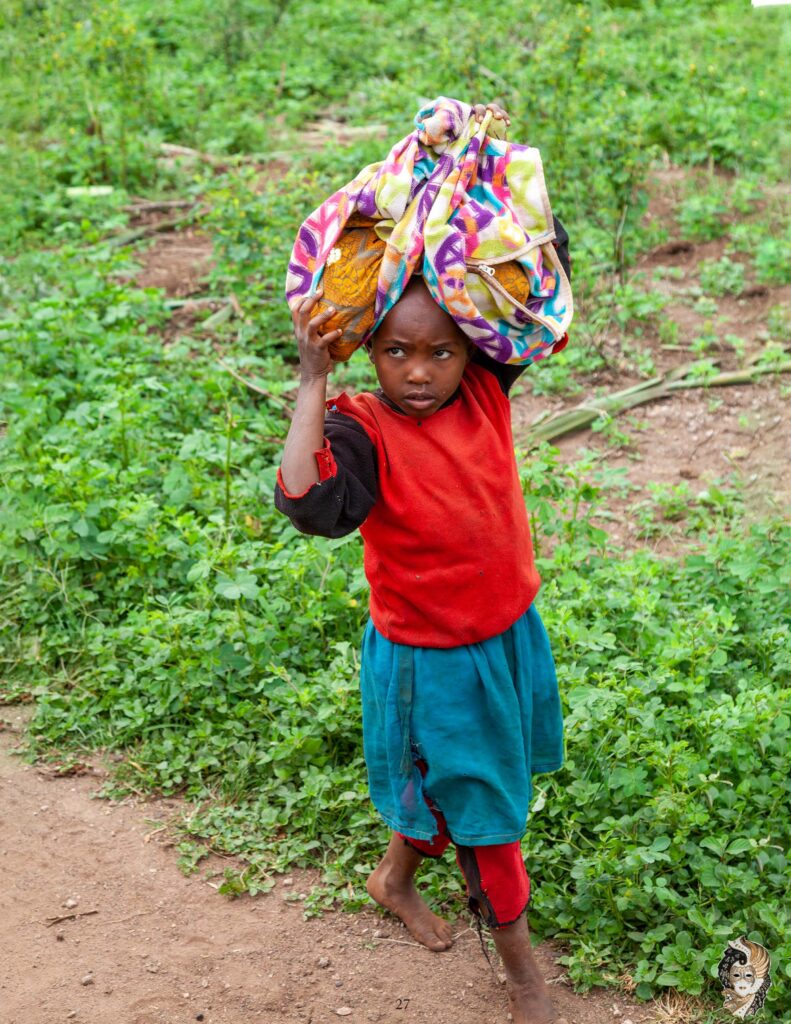
Even during hardship, pride is visible in children’s uniforms. Blue dresses and shorts with white shirts, often patched and faded, are worn as their best clothing. For many, the uniform is the finest thing they own, washed carefully when water is available, repaired again by mothers and grandmothers.
Uniforms unite the children, masking economic differences. To put one on is to step into dignity, to declare: I am a student. I’m part of a learning community.
Dreams Beyond the Village
As the sun sets over the fields, children walk home along narrow paths, past goats, cows, and rows of maize. Nights in Mamire are quiet, lit only by kerosene lamps. Families gather for simple meals, then sit together in the dark.
In the quiet, children dream. One boy imagines becoming a conservationist, inspired by the bee fences that protect his family’s farm. A girl dreams of being a doctor, remembering times when sickness swept through the village and medicine was scarce. Others hope to become teachers, engineers, or business owners—careers that feel far away but not impossible.
Above all, they dream of a future where their lives are not defined by poverty, but by opportunity.
A Lesson from Mamire
The story of Mamire is not one of despair, but of resilience. It is the story of children who rake driveways before class, who fetch water for their school garden, who study in bare classrooms with determination and pride. It is the story of families who farm against the odds, battling elephants with hives of bees.
It is also a reminder to the world that education does not need bright classrooms or advanced technology to matter. It needs commitment, dignity, and community.
For visitors who pass through Mamire on their way to the Tarangire National Park, the lesson is clear: the beauty of Tanzania lies not only in its wildlife or landscapes but in its people—especially its children, who embody resilience, joy, and hope.
