Story and Images by Terry Check
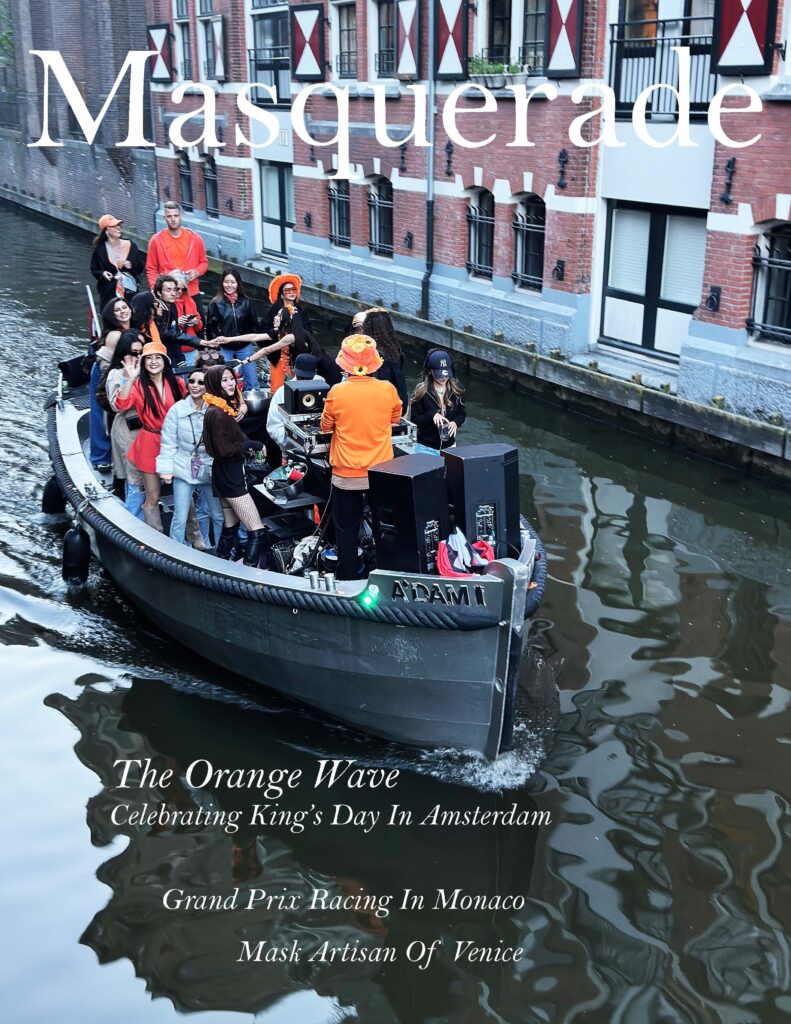
On April 27th each year, Amsterdam erupts in a jubilant blaze of orange. Streets brim with music, laughter, and the scent of sizzling street food. The canals ripple with the passage of boat parties, their decks crammed with revelers in everything from orange feather boas to neon wigs. This is Koningsdag—King’s Day—the Netherlands’ most exuberant national celebration, honoring the birthday of the reigning monarch, King Willem-Alexander.
For one day only, the entire country transforms into a playground of patriotism, joy, and creative chaos. In Amsterdam, the epicenter of festivities, King’s Day is more than a party—it’s a cultural phenomenon that blends centuries of tradition with modern Dutch ingenuity.
“Orange is happiness. Look around—this whole city is smiling.”
— Bas, 55, shop owner in Jordaan
A Brief History of the Orange Kingdom’s Day
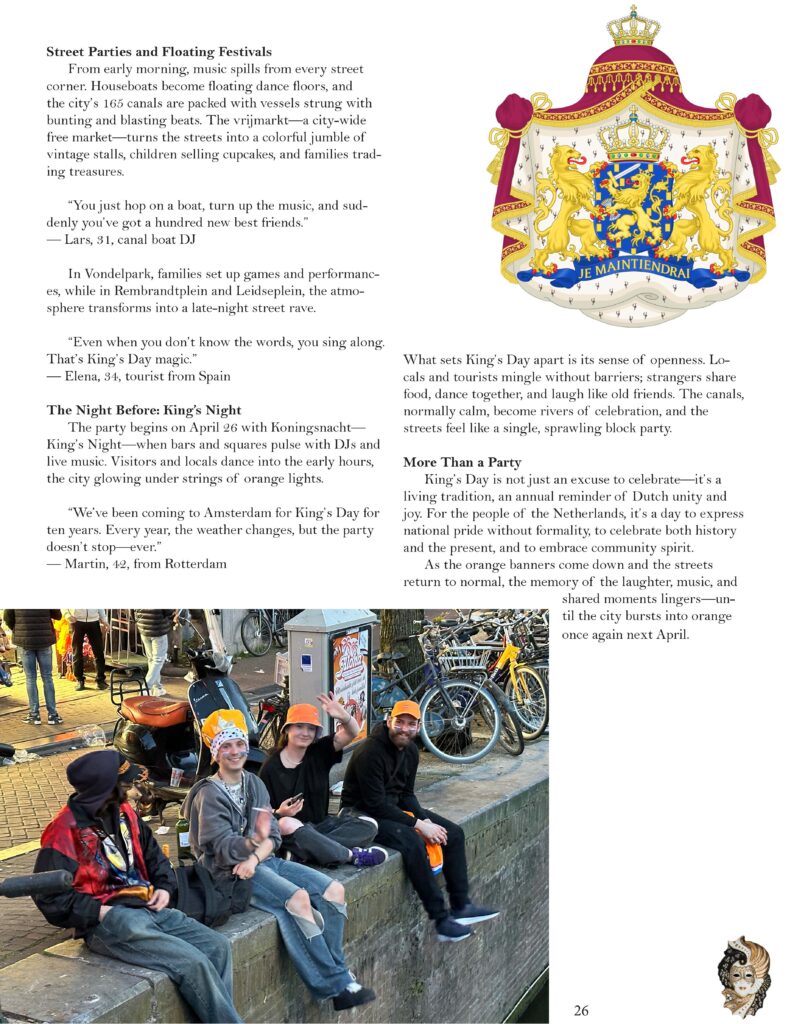
The roots of King’s Day stretch back to 1885, when the holiday was first celebrated as Prinsessedag (Princess’s Day) in honor of Princess Wilhelmina’s fifth birthday. When Wilhelmina became queen, the event evolved into Koninginnedag (Queen’s Day) and shifted dates with each monarch.
In 2013, Queen Beatrix abdicated in favor of her son, Willem-Alexander—the first king in over a century. With his accession, the holiday became King’s Day and moved to April 27, the king’s birthday.
“It’s not just a party—it’s a tradition. My parents celebrated, my grandparents celebrated, and now my kids are selling cupcakes on the street.”
— Rosa, 38, Amsterdam local

Meet the King and His Family
King Willem-Alexander Claus George Ferdinand, born in 1967, is known for his approachable manner, love of sports, and easygoing public presence. His wife, Queen Máxima, originally from Argentina, is admired for her warmth, style, and dedication to charitable work. Their three daughters—Princess Catharina-Amalia (heir to the throne), Princess Alexia, and Princess Ariane—are growing up in the public eye but remain symbols of a modern, relatable royal family.
Every King’s Day, the royal family visits a different city, participating in games and meeting locals in scenes broadcast nationwide.
A Sea of Orange
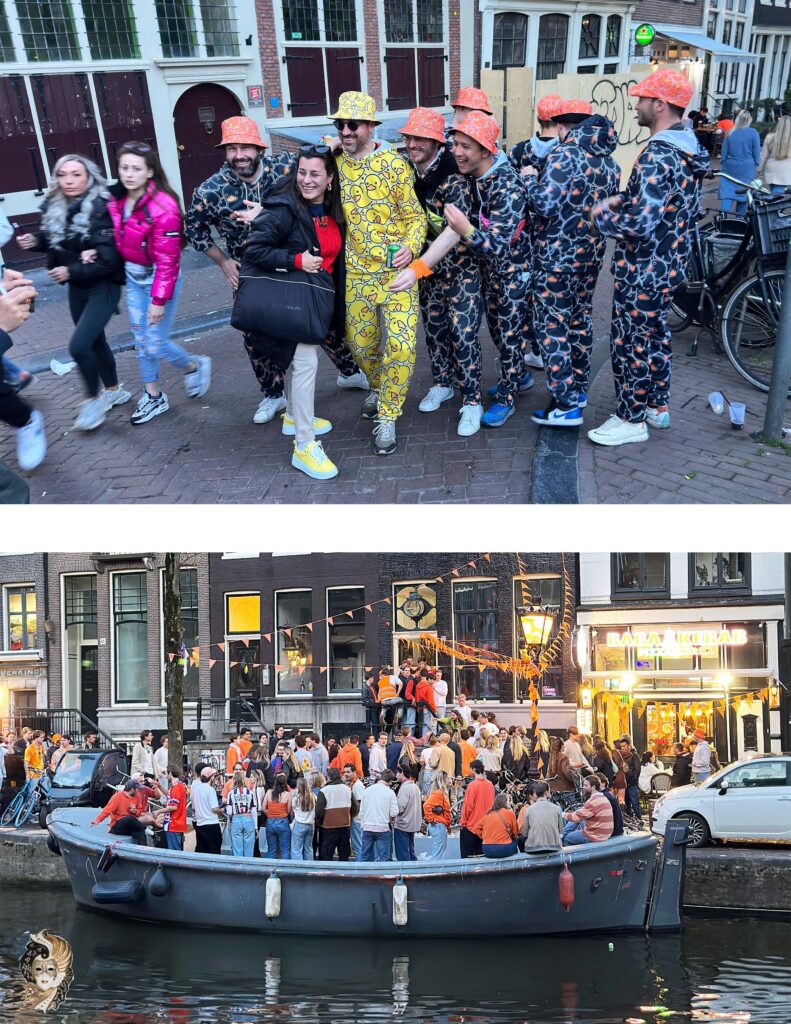
In Amsterdam, King’s Day means orange everything—from hats and shirts to face paint and even dyed pints of beer. The color comes from the royal House of Orange-Nassau but has become shorthand for Dutch pride.
“It’s the one day a year you can wear a bright orange wig and no one thinks twice—unless it’s not orange enough!”
— Anouk, 26, student from Utrecht
Street Parties and Floating Festivals
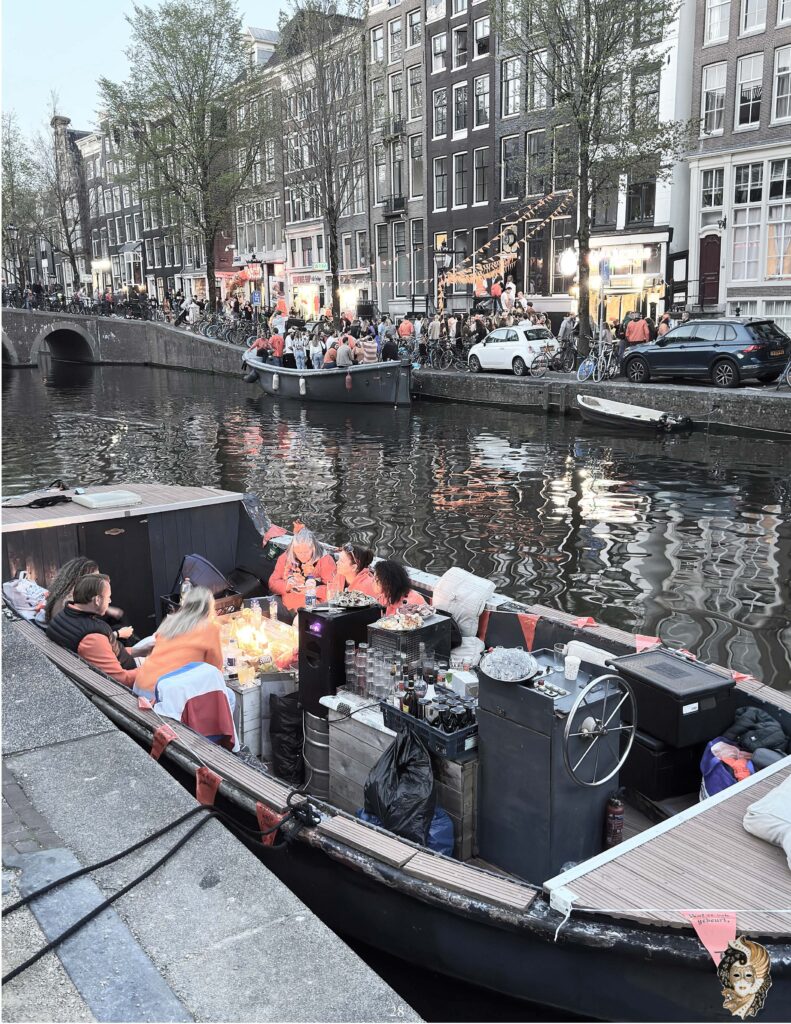
From early morning, music spills from every street corner. Houseboats become floating dance floors, and the city’s 165 canals are packed with vessels strung with bunting and blasting beats. The vrijmarkt—a city-wide free market—turns the streets into a colorful jumble of vintage stalls, children selling cupcakes, and families trading treasures.
“You just hop on a boat, turn up the music, and suddenly you’ve got a hundred new best friends.”
— Lars, 31, canal boat DJ
In Vondelpark, families set up games and performances, while in Rembrandtplein and Leidseplein, the atmosphere transforms into a late-night street rave.
“Even when you don’t know the words, you sing along. That’s King’s Day magic.”
— Elena, 34, tourist from Spain
The Night Before: King’s Night
The party begins on April 26 with Koningsnacht—King’s Night—when bars and squares pulse with DJs and live music. Visitors and locals dance into the early hours, the city glowing under strings of orange lights.
“We’ve been coming to Amsterdam for King’s Day for ten years. Every year, the weather changes, but the party doesn’t stop—ever.”
— Martin, 42, from Rotterdam
What sets King’s Day apart is its sense of openness. Locals and tourists mingle without barriers; strangers share food, dance together, and laugh like old friends. The canals, normally calm, become rivers of celebration, and the streets feel like a single, sprawling block party.
More Than a Party
King’s Day is not just an excuse to celebrate—it’s a living tradition, an annual reminder of Dutch unity and joy. For the people of the Netherlands, it’s a day to express national pride without formality, to celebrate both history and the present, and to embrace community spirit.
As the orange banners come down and the streets return to normal, the memory of the laughter, music, and shared moments lingers—until the city bursts into orange once again next April.
