Story and Photography by Terry Check
Every spring, the Netherlands bursts into color as millions of tulips blanket fields, gardens, and greenhouses across the country. For travelers, two destinations capture the essence of this bloom more than any others: Keukenhof, the world’s most famous flower park, and Kwekerij Siem Munster, a family-run tulip farm in the quiet village of Slootdorp. Together, they reveal the two faces of Holland’s most iconic flower: the dazzling spectacle and the intimate, behind-the-scenes reality.
Kwekerij Siem Munster: The Heart of Tulip Cultivation
Travel an hour north of Amsterdam, beyond the crowded tourist routes, and you’ll find Slootdorp, a modest village surrounded by fields reclaimed from the sea. Here sits Kwekerij Siem Munster, a farm where tulip cultivation is not theater, but livelihood.
Founded and still run by Siem and Sandra Munster, the nursery blends modern horticultural science with family tradition. They grow both bulbs and cut flowers, producing millions of tulips each season that end up in Dutch markets and beyond. But what makes the farm truly special is its willingness to open its doors to visitors.
Did You Know?Tulips grow from bulbs, not seeds, and it takes about 7–10 months for a tulip bulb to bloom once planted.
Sandra Munster was the driving force behind this idea. Realizing that travelers craved a more authentic experience, she launched the Tulip Excursion, offering groups an inside look at the life of a tulip farm. Today, some 4,000–5,000 visitors each season—ranging from international tourists to local school groups—step through the farm’s gates.
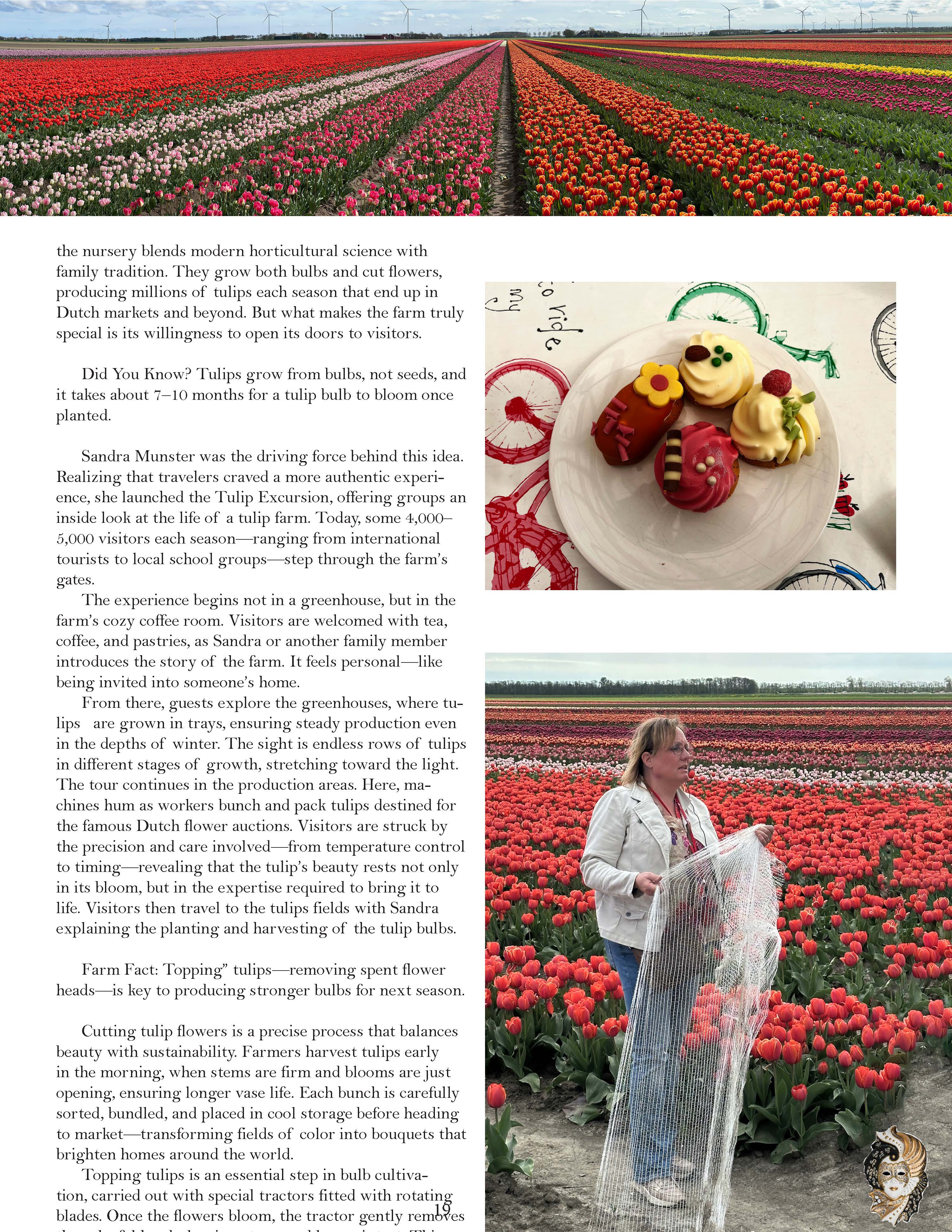
The experience begins not in a greenhouse, but in the farm’s cozy coffee room. Visitors are welcomed with tea, coffee, and pastries, as Sandra or another family member introduces the story of the farm. It feels personal—like being invited into someone’s home.
From there, guests explore the greenhouses, where tulips are grown in trays, ensuring steady production even in the depths of winter. The sight is endless rows of tulips in different stages of growth, stretching toward the light.
The tour continues in the production areas. Here, machines hum as workers bunch and pack tulips destined for the famous Dutch flower auctions. Visitors are struck by the precision and care involved—from temperature control to timing—revealing that the tulip’s beauty rests not only in its bloom, but in the expertise required to bring it to life. Visitors travel to the tulip fields with Sandra explaining the planting and harvesting of tulip bulbs.
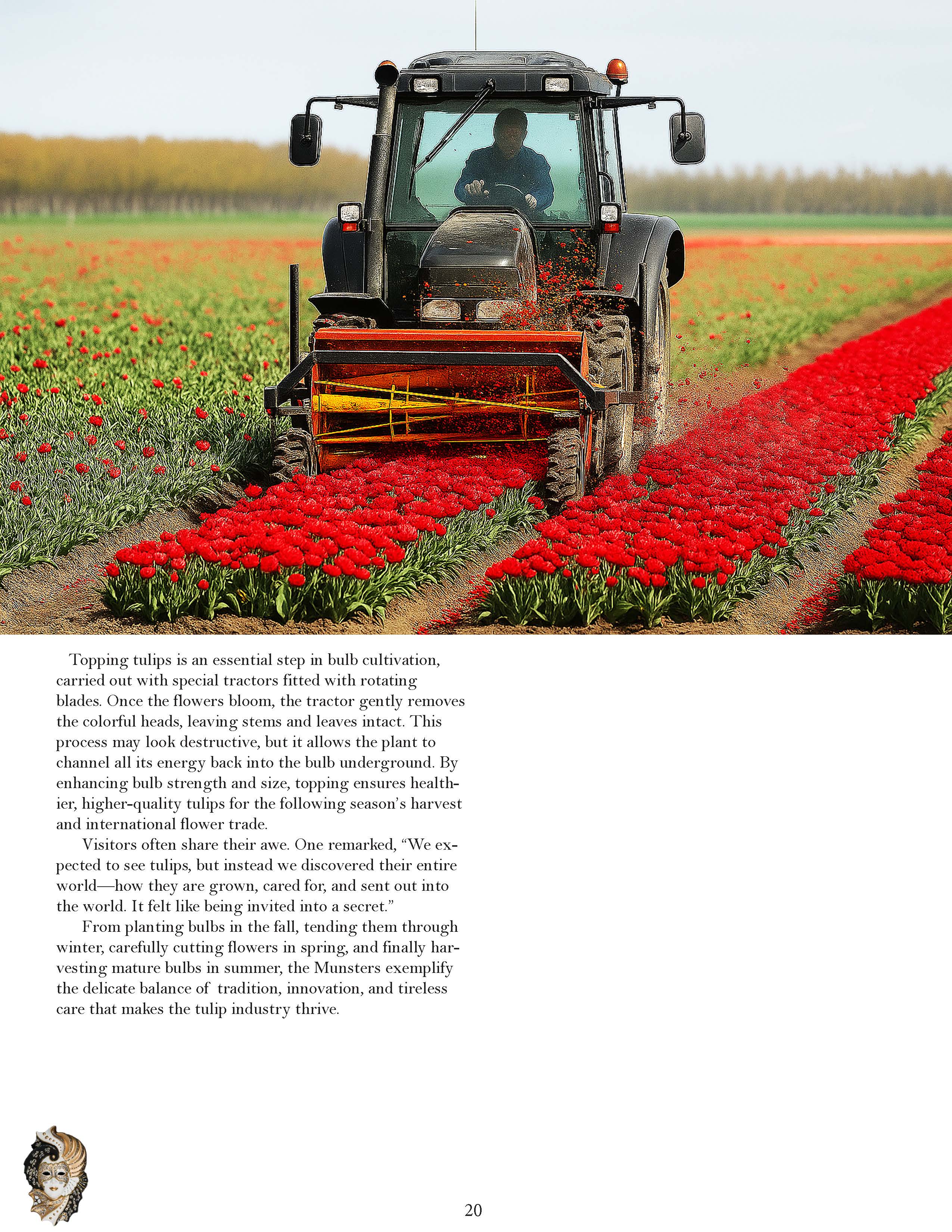
Farm Fact:“Topping” tulips—removing spent flower heads—is key to producing stronger bulbs for next season.
Cutting tulip flowers is a precise process that balances beauty with sustainability. Farmers harvest tulips early in the morning, when stems are firm and blooms are just opening, ensuring longer vase life. Each bunch is carefully sorted, bundled, and placed in cool storage before heading to market—transforming fields of color into bouquets that brighten homes around the world.
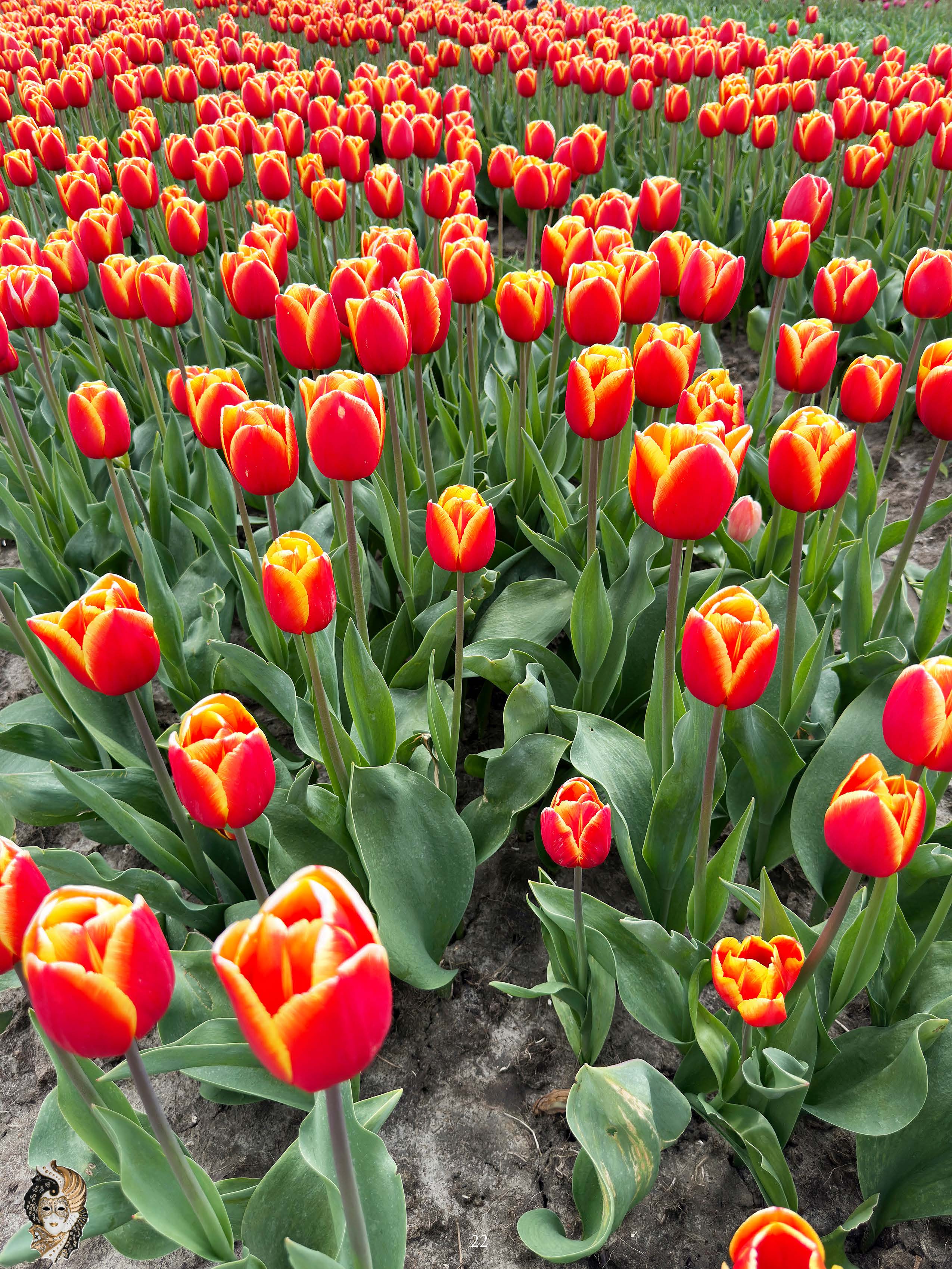
Topping tulips is an essential step in bulb cultivation, carried out with special tractors fitted with rotating blades. Once the flowers bloom, the tractor gently removes the colorful heads, leaving stems and leaves intact. This process may look destructive, but it allows the plant to channel all its energy back into the bulb underground. By enhancing bulb strength and size, topping ensures healthier, higher-quality tulips for the following season’s harvest and international flower trade.
Visitors often share their awe. One remarked, “We expected to see tulips, but instead we discovered their entire world—how they are grown, cared for, and sent out into the world. It felt like being invited into a secret.”
From planting bulbs in the fall, tending them through winter, carefully cutting flowers in spring, and finally harvesting mature bulbs in summer, the Munsters exemplify the delicate balance of tradition, innovation, and tireless care that makes the tulip industry thrive.
Keukenhof: The Theater of Tulips
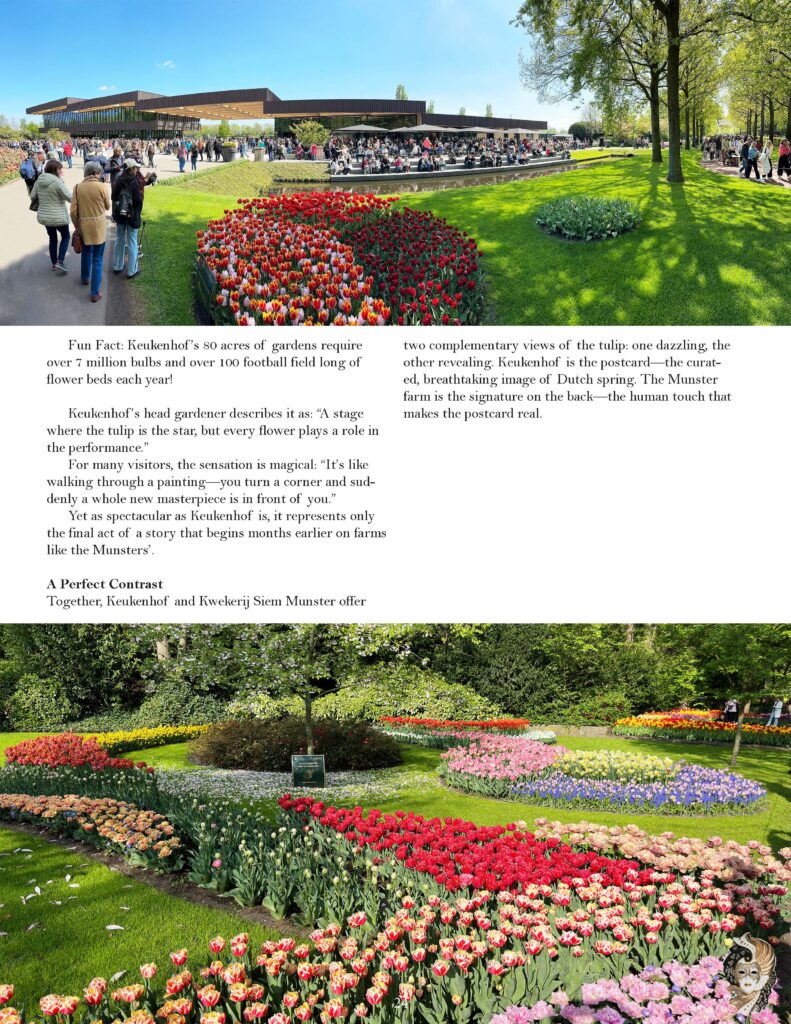
If Slootdorp shows tulips as life, Keukenhof shows tulips as art. Located in Lisse, just under an hour from Amsterdam, the park transforms nearly 80 acres of meticulously landscaped gardens into a kaleidoscope of color every spring. Open for only eight weeks—from late March to mid-May—Keukenhof features around seven million bulbs planted into intricate patterns, themed gardens, and sweeping rivers of color.
Visitor Tip:Visit Keukenhof on weekdays early in the morning to enjoy fewer crowds and more peaceful strolls through the gardens.
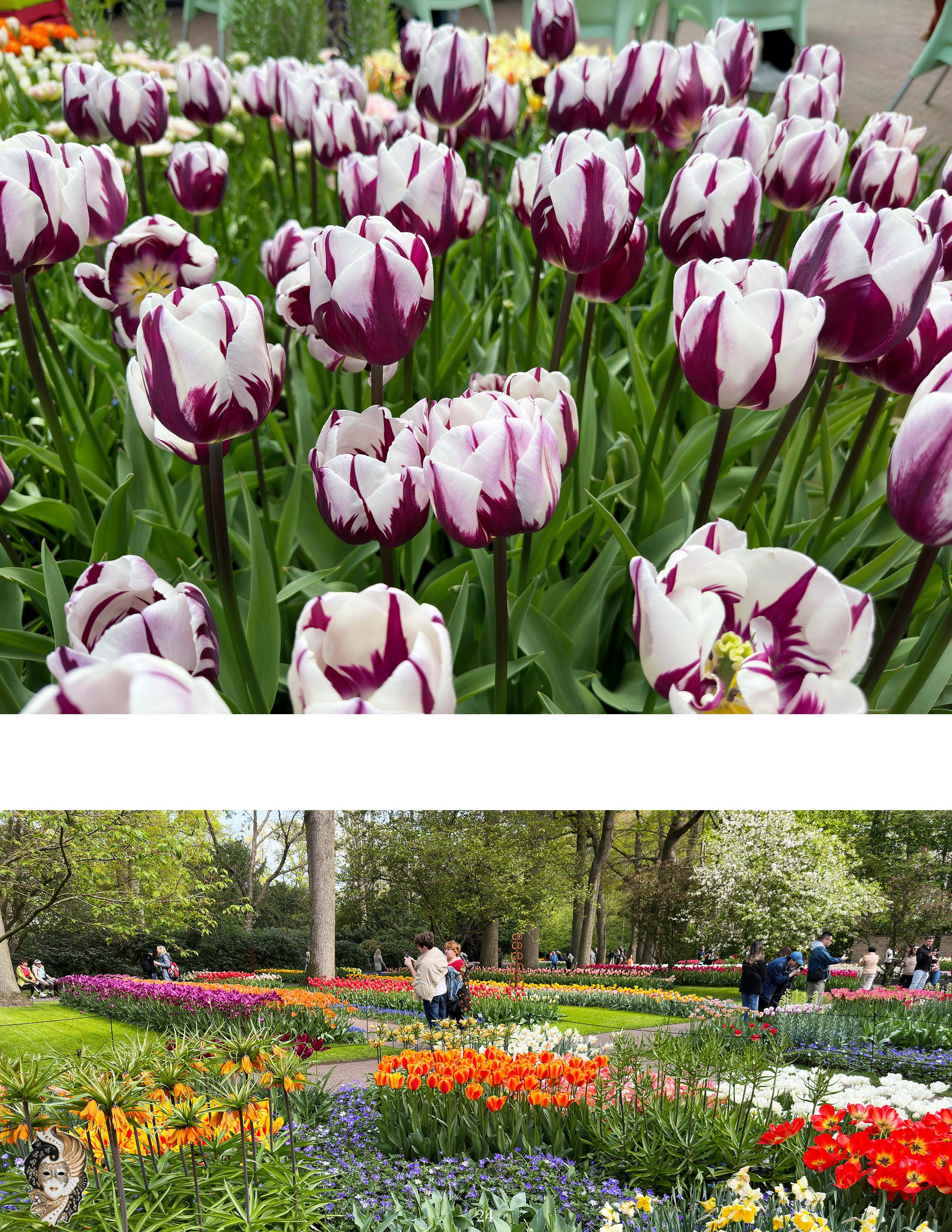
Visitors wander along winding paths, past tulips of every imaginable variety: fringed, double, parrot, and classic single blooms. The scent of hyacinths, daffodils, and orchids fills the air, while sculptures, fountains, and traditional Dutch windmills punctuate the landscape, creating a fairytale atmosphere.
Founded in 1949 as a showcase for the Dutch flower industry, Keukenhof has grown into an international horticultural attraction. Each year, themed gardens change, ensuring no two visits are ever the same. Highlights include: the Orange Nassau Pavilion, displaying rare and newly developed tulip varieties; the Historical Windmill, offering panoramic views of surrounding bulb fields and the Art Installations and Sculptures, blending contemporary design with floral elegance.
Visitors can also enjoy guided tours, boat rides along the park’s canals, flower arranging workshops, and seasonal events like the Bloemencorso Bollenstreek, a parade of floats adorned entirely with tulips and other bulbs.
Fun Fact: Keukenhof’s 80 acres of gardens require over 7 million bulbs and over 100 football field long of flower beds each year!
Keukenhof’s head gardener describes it as: “A stage where the tulip is the star, but every flower plays a role in the performance.”
For many visitors, the sensation is magical: “It’s like walking through a painting—you turn a corner and suddenly a whole new masterpiece is in front of you.”
Yet as spectacular as Keukenhof is, it represents only the final act of a story that begins months earlier on farms like the Munsters’.
A Perfect Contrast
Together, Keukenhof and Kwekerij Siem Munster offer two complementary views of the tulip: one dazzling, the other revealing. Keukenhof is the postcard—the curated, breathtaking image of Dutch spring. The Munster farm is the signature on the back—the human touch that makes the postcard real.
Many thanks to an amazing photo retouch artist, @fashion.retoucher.2024. Most photos published on social media and print publications require the skills of a retouch artist to bring the photos to life.
